
New
€ 99,90
Available for pre-order
Fast delivery with value insured
Secure payments








Other information
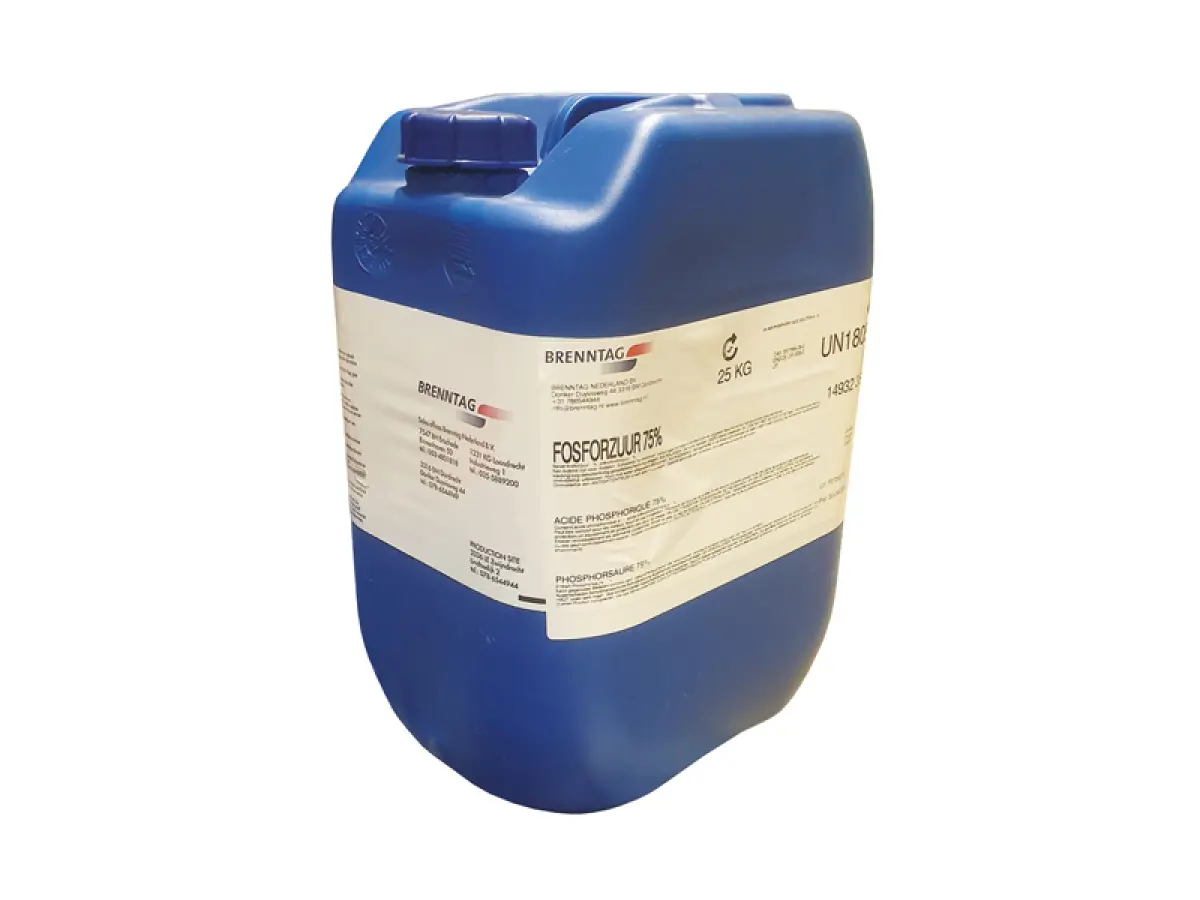
25 kg Package
- Phosphoric acid (H3PO4) is the most important acid of the phosphorus element. It holds a central position among inorganic acids and is used in many industrial sectors. As an ester of phosphoric acid and in the form of polyphosphates, phosphoric acid plays a fundamental role in human metabolism. Among other things, it is an important component of the energy carrier adenosine triphosphate (ATP)
- Phosphoric acid is also a component of DNA, RNA, and many coenzymes. Together with calcium, it forms hydroxyapatite in the body, which makes up bones and teeth
- At high concentrations, phosphoric acid is corrosive. It is a colorless and odorless solid. It is a weak to moderately strong triprotic acid. The salts and esters of phosphoric acid are called phosphates; the latter are also known as organophosphates. The chemical is highly hygroscopic and can be mixed with water
- It is usually distributed as an aqueous solution at 83-90%. Phosphoric acid has good conductivity
- Phosphoric acid is produced from raw phosphate – usually the mineral apatite – and sulfuric acid, hydrochloric acid, or nitric acid. Alternatively, so-called thermal phosphoric acid can be produced by burning phosphorus to form phosphorus pentoxide followed by hydrolysis
- It finds wide application in dentistry and orthodontics for tasks such as bonding, creating dental appliances, and forming fillings
- Food-grade phosphoric acid is used to acidify a variety of food products and beverages, including some colas and jams
- Due to its non-toxic nature, phosphoric acid serves various industries in multiple capacities. It is also used as a sanitizing agent in the dairy, food, and brewing sectors. Additionally, it has a wide range of uses as a pH regulator in cosmetics and skincare products
TECHNICAL DATA
Molar weight: 97.994g/mol
Melting point: 40–42.4 °C
Boiling point: 212 °C
Density: 1.684 g/cc