
Fast delivery with value insured
Secure payments








Other information
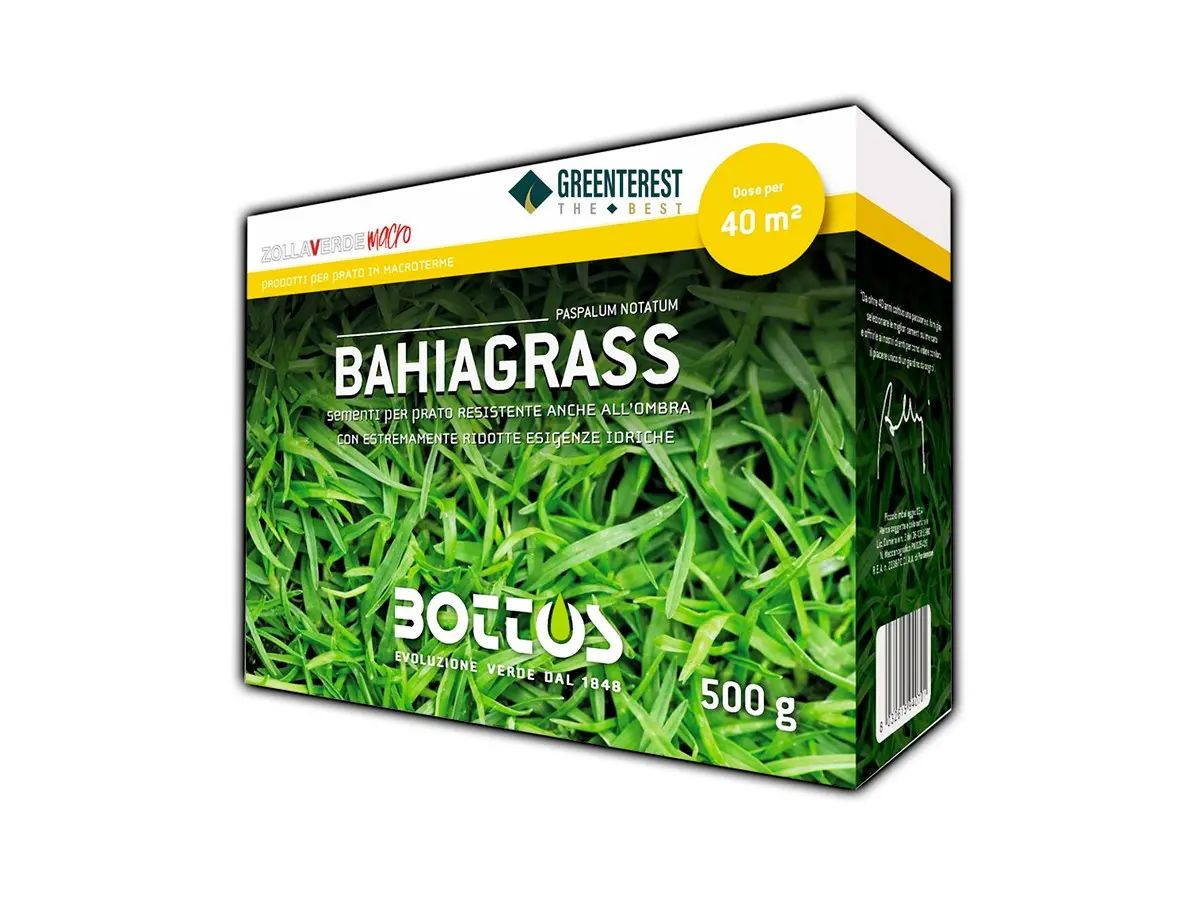
500 g package
- BAHIAGRASS is the solution for creating lawns in hot conditions and with salinity in the growing substrate and potential irrigation waters
- It is seed of the species Paspalum notatum, a warm-season grass native to South America, featuring a deep and fibrous root system
- It has a slightly upright growth habit and therefore requires medium-high cutting heights (approximately 4-6 cm)
- The seeds, which are small in size, are coated to improve germination capacity and simplify sowing operations
- It shows good drought tolerance and requires low maintenance interventions (it also adapts well to dry soils poor in organic matter)
- Its wear resistance is good, making it suitable for residential gardens with heavy foot traffic (e.g., hospitality facilities)
- Shade tolerance is medium to low
- It forms robust and visible lateral propagation organs (stolons and rhizomes)
- Stolons can also exhibit a typical reddish coloration
- It goes dormant in late autumn and survives cold periods by halting its metabolic processes
- In cold conditions, it tends to lose its foliage, so overseeding with MACROSEEDING is always preferable to ensure
- grass coverage of the lawn throughout the year
- Sowing is not recommended in areas where harsh winter conditions occur and temperatures remain below 0 °C for several days
- Its use is very interesting for low-maintenance areas such as public parks, roadside slopes, and/or flowerbeds and gardens in coastal environments subject to drought and high temperatures
Soil
: loose, warm, soft, preferably well-aerated, with neutral to slightly alkaline pH
Sowing period: from April to late August
BAHIAGRASS requires soil temperatures above 15-18 °C to allow optimal
germination
Recommended dosage: 10-15 g/m2
Maximum doses are recommended in case of late sowing and/or imperfect seedbed preparation
Mowing: perform the first cut when the turf reaches 6-8 cm, about 3-4 weeks after emergence, and immediately lower it to 5.5-6 cm.
Once the lawn is mature, it can be safely cut down to 4-5 cm.
The lower the cutting height, the higher the maintenance requirements
Nutrition: phosphate fertilization at sowing.
During the vegetative growth phase (late spring, summer, and early autumn) it is advisable to maintain an adequate nitrogen level to support plant metabolism with fertilizers such as Reprise 20. 5. 10 or Hot Summer 35. 0. 0.
The frequency of application varies depending on the type of use/cutting height maintained.
Before entering dormancy (autumn), it is recommended to apply Cold Time 4. 3. 8 to withstand winter harshness and promote a quick spring restart.
The same fertilizer is also very effective for the first vegetative awakening in spring
Irrigation: if an irrigation system is present, keep the soil constantly moist at sowing to avoid halting the germination process. Afterwards, the amount of water can be greatly reduced (depending on the type of use)
Phytostimulation: benefits greatly from treatments with phyto-fortifiers and biostimulants
Regeneration: can be performed in 2 different periods with 2 different purposes. Early-late autumn (depending on the area) to prevent yellowing and allow vegetative growth of the lawn, using MACROSEEDING (special formula based on selected and specific short-transition spring ryegrasses) at a dose between 40-50 and 80 g/m2 (higher doses refer to technical overseeding). Or late spring (late April-June) with BAHIAGRASS at a dose of 5-10 g/m2 to close any gaps created during winter.
In any case, a verticut with removal of thatch and debris must always be performed before overseeding operations
You might also be interested in View all