
Fast delivery with value insured
Secure payments








Other information
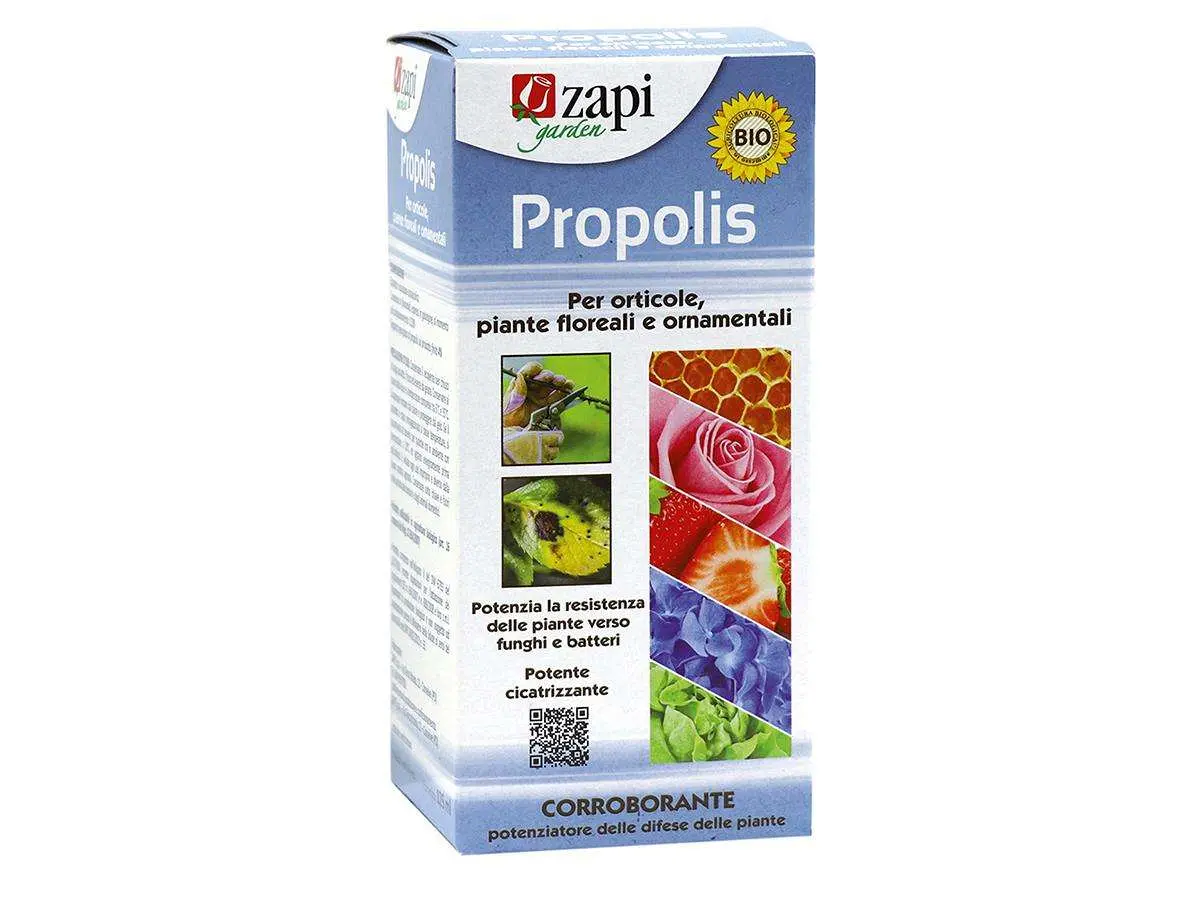
- Balances metabolism, particularly in negative situations caused by biotic stress (pathogens, fungi, bacteria) and abiotic stress (temperature, humidity, light, water)
- Acts as a protective agent by forming a waxy film that defends the surface of fruits and reduces water loss in plants
- Promotes the healing of wounds caused by trauma or pruning of plants, preventing pathogen penetration
- Attractive to bees and pollinating insects, supporting natural flower fertilization
Composition
Propolis extract in organic non-GMO flaxseed oil; flavonoid content, expressed as galangin, at the time of packaging: 1.2%.
The Propolis, collected from beehives, undergoes maceration and extraction with organic non-GMO flaxseed oil to release substances capable of stimulating the natural defenses of plants in a wide range of situations; completely natural, free from preservatives or artificial colorants, and sourced from beehive Propolis.
Dosage and instructions for use
Foliar treatment: use about 30ml per 5 liters of water, spraying the plant evenly over the entire surface, including the underside of leaves, branches, and stem.
To optimize the treatment, it is recommended to apply the product using a pressure sprayer (it is completely water-soluble).
Preventive action: apply at intervals of 10-15 days for fruit trees and vegetables from the beginning of flowering until fruit harvest, and from bud break to full flowering for ornamental and flowering plants; to ensure balanced and robust plant development, a series of preventive treatments is advisable starting from the young plant until the completion of the cycle: vegetative growth, budding, flowering, fruit set, veraison, and ripening.
Perform the treatment during the less sunny hours of the day.
Reinforcement action: when the plant disease appears, repeat the treatment 3-7 days after the first application.
Ideal for vegetable crops (arugula, lettuce, valerian, tomato, eggplant, etc.), fruit crops (apple, pear, apricot, peach, plum, cherry), vine, kiwi, olive, citrus, strawberry, and on ornamental plants, flowers, hedges, and lawns.